Business Wish
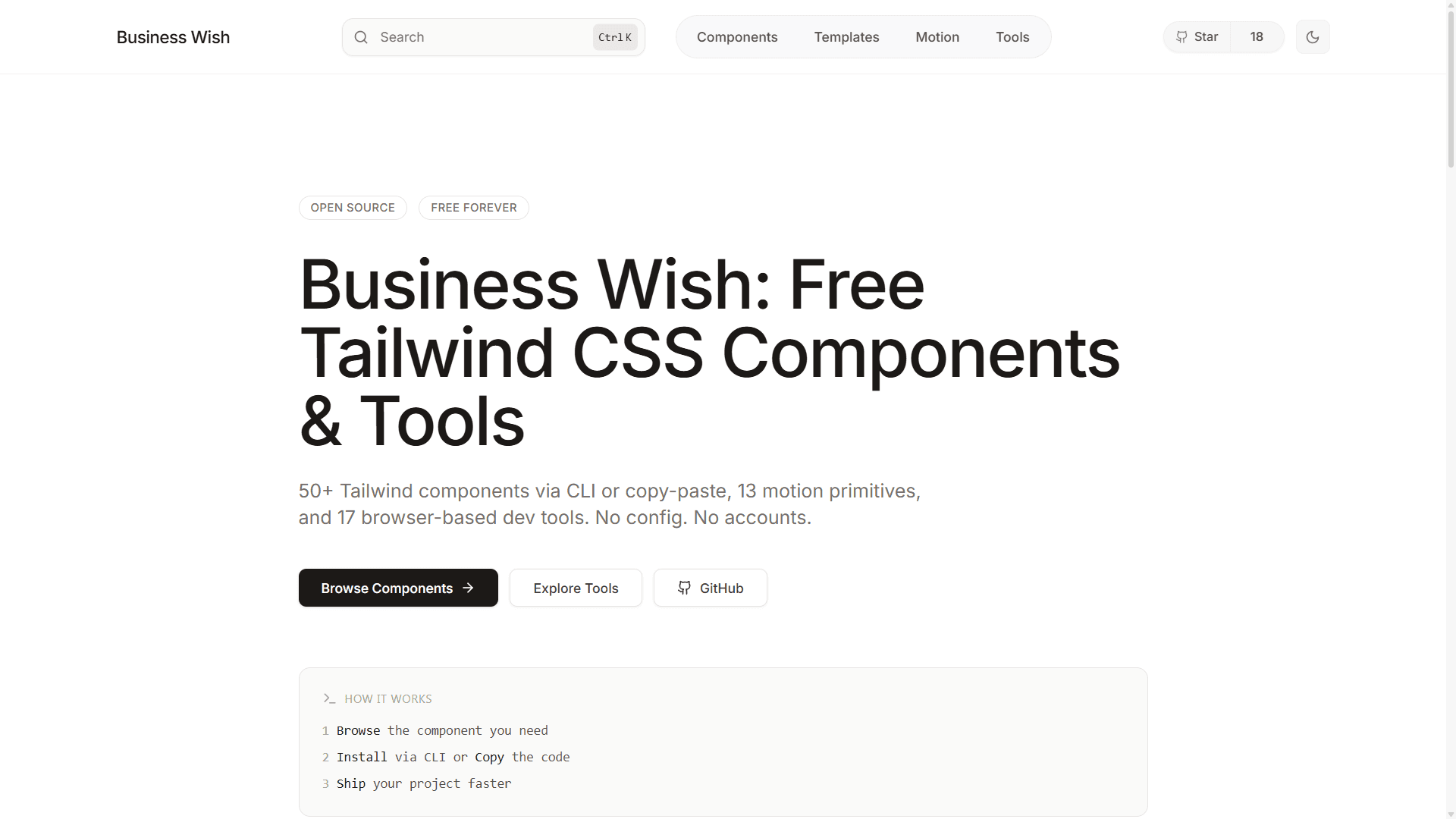
A zero-install developer catalog offering 50+ modular Tailwind CSS utilities, motion-driven UI snippets, and browser-based client-side tools.
The Problem
Web developers frequently lose momentum hunting for polished, accessible UI components or basic utilities online. Most existing solutions are gated behind account signups, paid subscriptions, or heavy npm package installations that introduce dependency drift and bloat codebases.
My Role
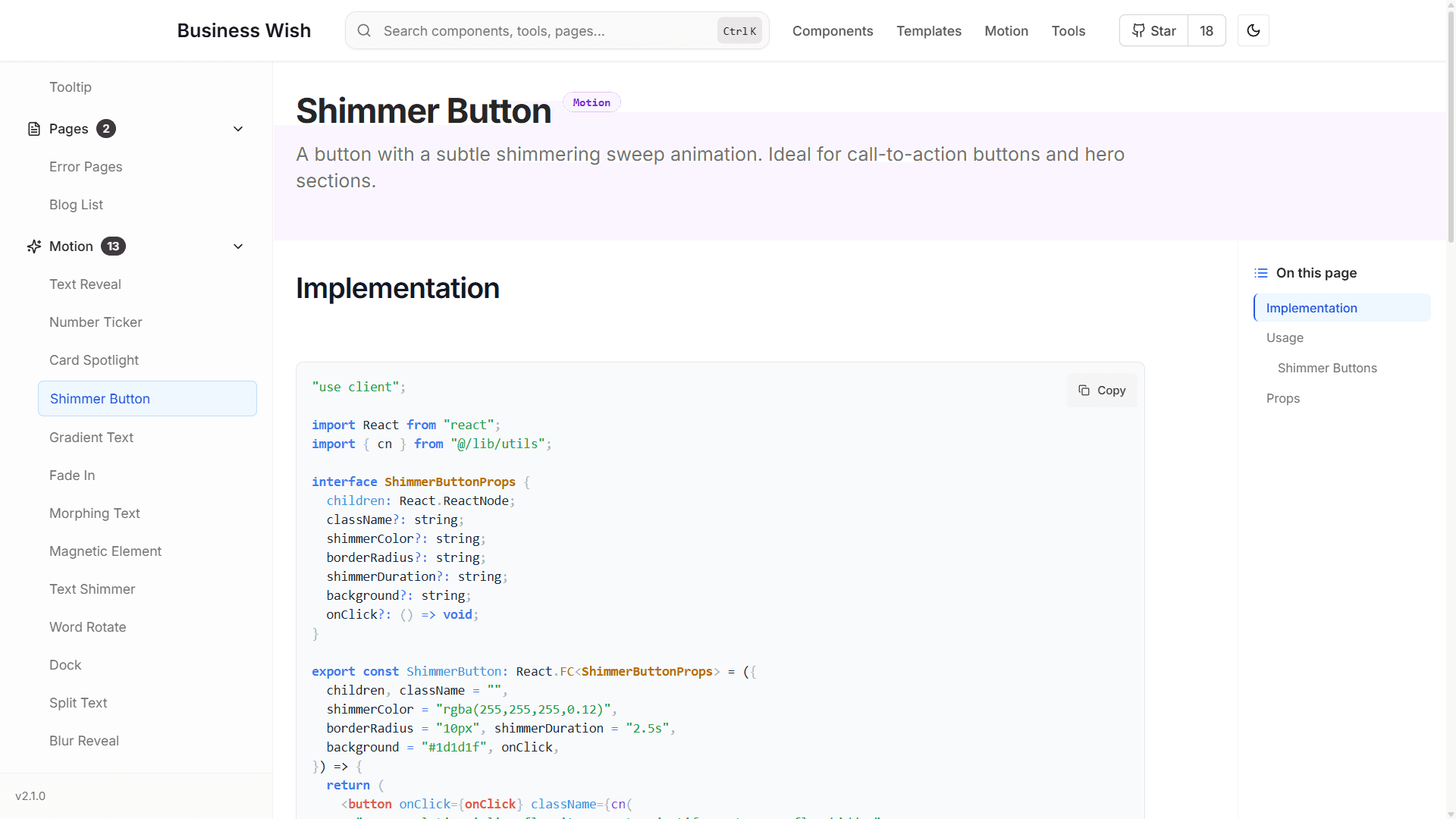
- →Researched, designed, and developed 50+ lightweight copy-paste components optimized for Tailwind CSS.
- →Created smooth, high-fidelity UI transitions using Framer Motion.
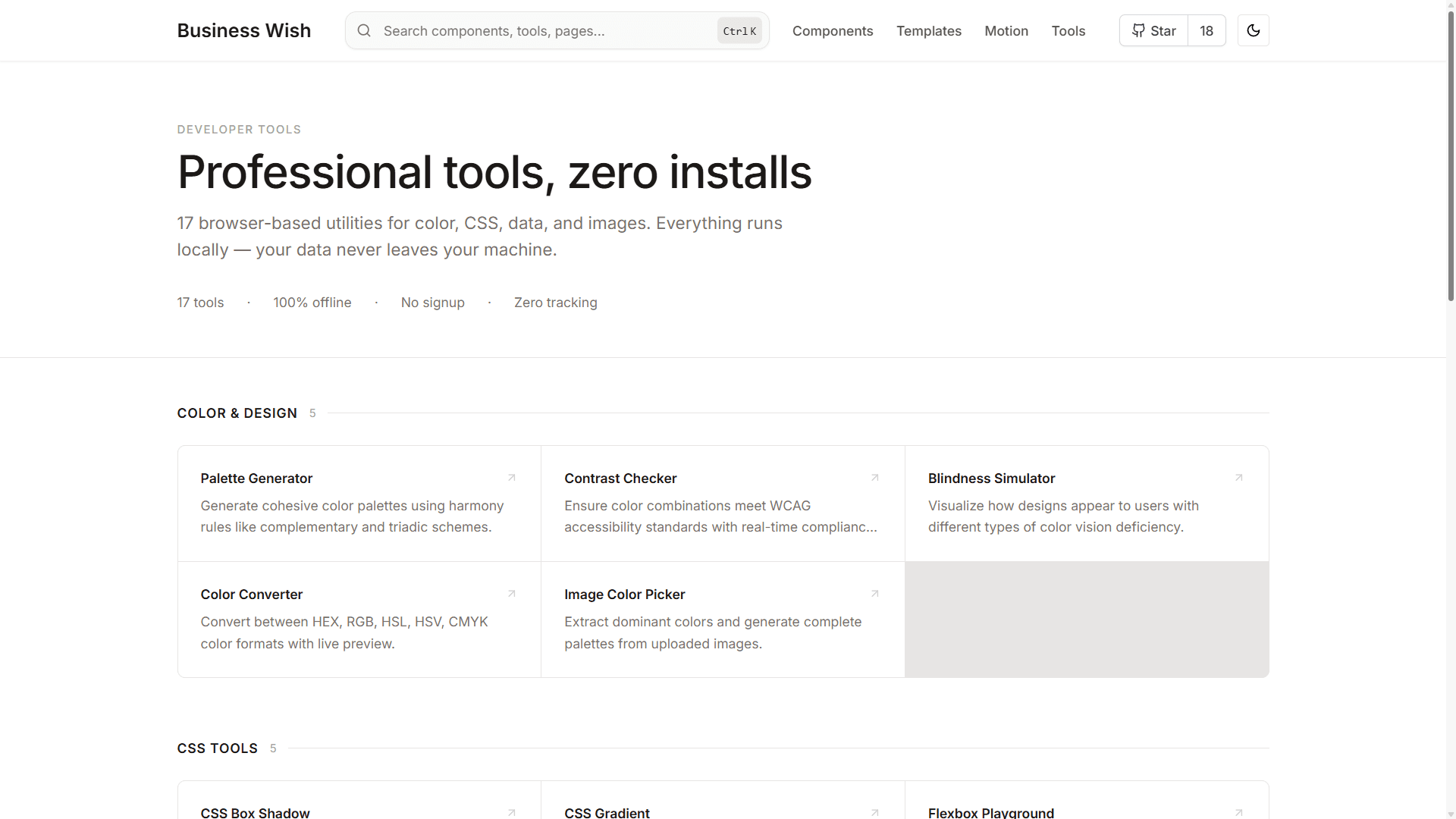
- →Built 15+ browser-based utilities (encoders, formatting tools, color-converters) executing entirely client-side for absolute privacy and speed.
- →Authored the custom build scripts and visual documentation site to enable one-click copy-paste functionality.
The Solution
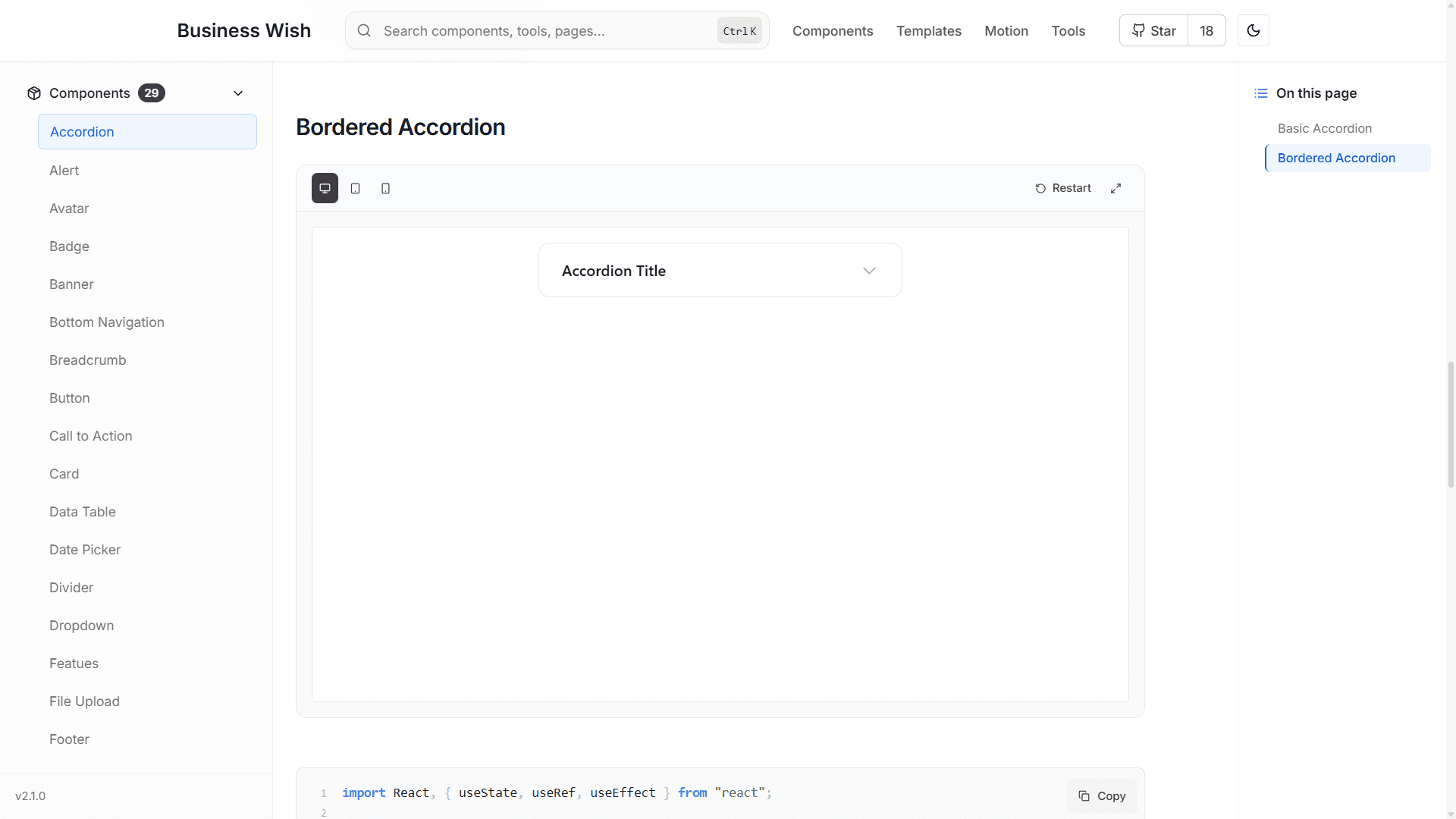
I built a consolidated, zero-config workspace where developers can instantly copy beautifully formatted components and access core browser tools. The platform requires no accounts or installations, operating as a clean, client-side utility hub.
Technical Decisions
Why React Server Components (RSC)?
By utilizing Next.js Server Components, I structured the component previews to load instantly as static HTML. The client-side JavaScript is only loaded when mounting interactive developer mini-tools, keeping the initial bundle footprint exceptionally small.
Why copy-paste Tailwind?
Package-based component libraries often enforce rigid design assumptions. By distributing raw, uncompiled Tailwind utilities, developers retain complete control over customization and avoid adding global CSS overrides to their codebase.
What Broke
The primary technical hurdle was maintaining isolation across 15+ active, state-heavy browser tools on a single page. Initially, rendering multiple JSON parsers, CSS converters, and regex helpers led to unnecessary parent re-renders, causing input latency. To fix this, I redesigned the state architecture, isolating reactive boundaries inside client components and memoizing intensive parsing routines.
Key Outcomes & Metrics
- →Successfully shipped 50+ components, 10+ motion snippets, and 15+ interactive developer tools.
- →Achieved high Lighthouse performance marks (98+ performance) and built a highly-engaged weekly developer user base.
What I'd Do Differently
“If I were rebuilding the platform today, I would implement a unified search taxonomy and tagging engine from day one. As the library scaled past 50 components, finding specific layout utilities or encoding tools became a retrieval bottleneck that a robust categorization model would have avoided.”
Get In Touch
Always open to a chat, whether it's about an idea, a collaboration, or just an interesting conversation. Particularly interested in fast-moving teams solving exciting problems in AI, SaaS, developer tools, and enterprise software. Say hi anytime!